Last updated: 3 Aug 2026
Supporting homebuyers, rewarding taxpayers: an assessment of the performance of Help to Buy
Downloads

Contents
- Introduction
- Performance of Help to Buy
- Genesis of Help to Buy
- Interventions before Help to Buy
- Impact on housing supply
- Addressing the ‘inflationary’ arguments
- Supporting today’s homebuyers: HBF proposal for a new equity loan scheme using contributions from home builders
Introduction
This paper analyses the performance of the Help to Buy loan book and explores the returns for the Exchequer.
Help to Buy was established in 2013, providing homebuyers with an equity loan to purchase a new build home. The equity loan offered by HM Government provided taxpayers with an equity stake in each new build home purchased through the scheme.
Help to Buy was successful in driving home ownership, increasing housing supply and now continues to generate positive returns for taxpayers.
Using all available data, we explore below the impact of the scheme, including new analysis of redemptions data to calculate the positive Exchequer benefits now that more than half of all equity loans issued through Help to Buy have been fully repaid.
In 2024, the Ministry of Housing, Communities and Local Government commissioned an evaluation of the Help to Buy scheme. The evaluation engaged expert consultants and involved extensive research into key data, including redemptions, arrears and overall financial performance while also benefiting from extensive interviews with homebuyers, mortgage lenders and home builders. HBF has consistently urged government to publish its Help to Buy evaluation as the need for a new scheme becomes more apparent.
Performance of Help to Buy
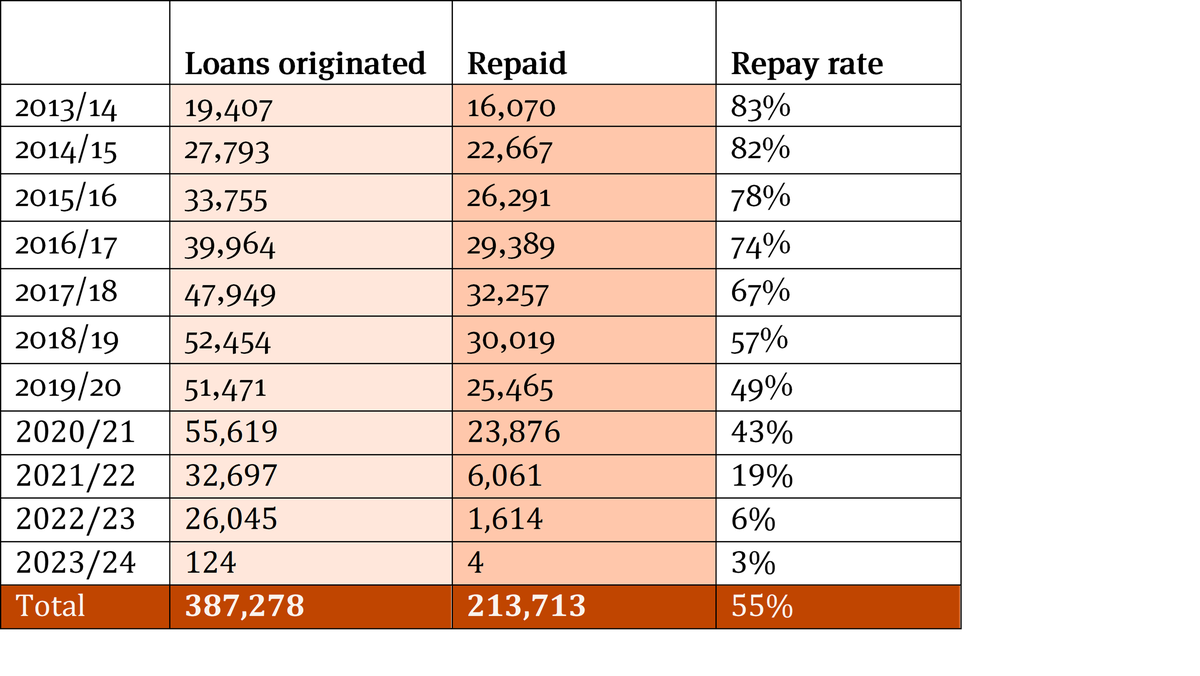
Help to Buy assisted 387,278 households to purchase a new build home between 2013 and 2022. At the end of March 2026, 213,713 equity loans had been fully repaid, meaning that more than 55% of loan accounts are now closed.
Analysis of the closed loan accounts shows that they had a value at origination of £11.98bn, but the repayment value was £13.22bn, an increase of £1.24bn against the amount loaned, representing a positive return on the investment of 10.4% to date.
The return on all redeemed loans increased from 10.3% up to March 2025 to 10.4% up to March 2026 owing to a higher rate of return on loans redeemed during 2025/26.
Interest income
As well as repayment of equity loans, another source of income from Help to Buy has been interest payments, termed “Homeowner Fees” by Homes England.
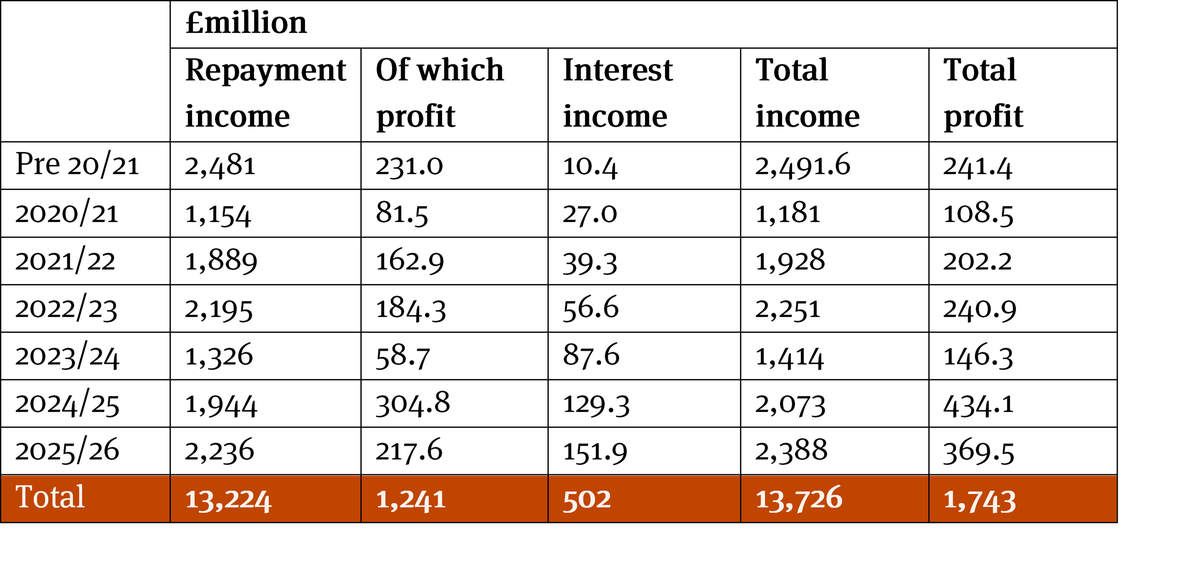
Since 2018/19, interest payments have generated £510 million in income for Homes England, including £151.9 million in 2025/26.
Help to Buy interest income by year

Total returns
Combining positive returns on the Help to Buy equity loan book and the interest income derived from the scheme to date, the Exchequer has so far benefitted from around £1.74bn of ‘profit’. This is equivalent to a year of VAT-free energy bills.
2025/26 activity
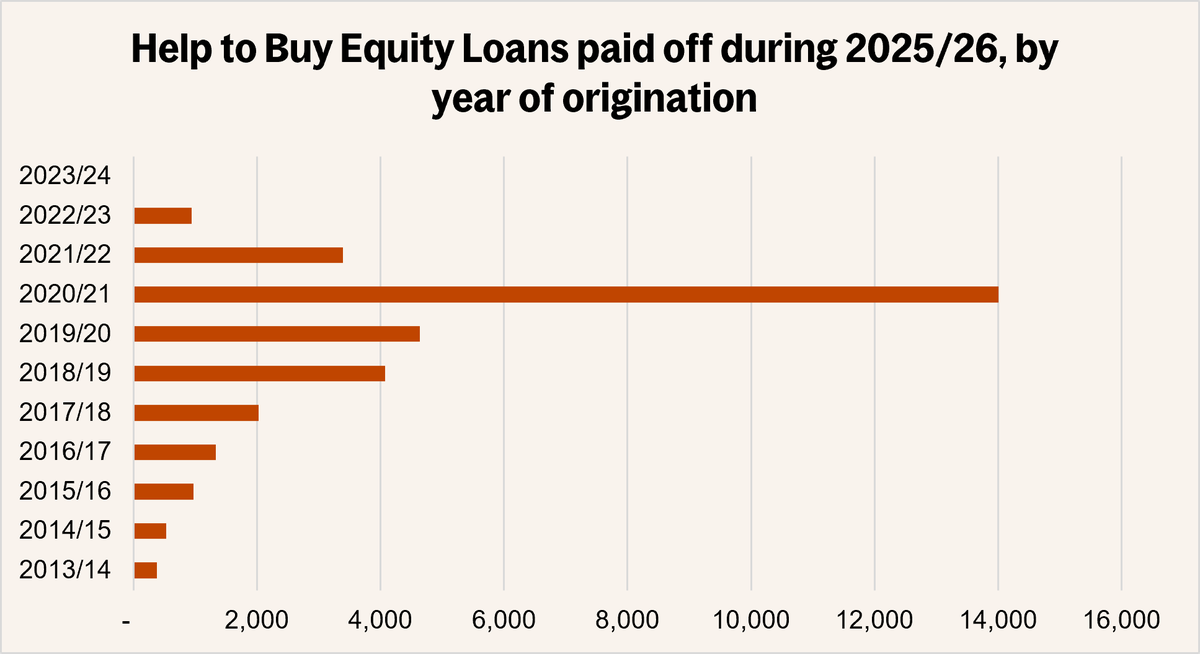
Homes England annual accounts show that 32,276 Help to Buy equity loans were paid off during 2025/26.
Almost 45% of equity loans repaid during 2025/26 were originated in 2020/21. Including the two prior years, 2018/19 and 2019/20, more than 7 in 10 of the loans repaid in the year had been originated in that three year period, continuing a consistent theme with the Help to Buy loan book that redemption typically occurs in years five to seven following origination.
The 32,276 loans paid off during 2025/26 had an origination value of £2.02 billion, but Homes England received £2.24bn, an increase on the original value of £218 million (10.8%). This annual positive return over original outlay is enough to fund 24 armed autonomous drones to operate alongside Apache helicopters as part of ‘Project NYX’ in the government’s Defence Investment Plan.
‘Profit’ on equity loans taken together with interest income during the year, created £370 million in positive returns for the Exchequer during 2025/26.
Overall equity loan book
By March 2026, 55% of all equity loans issued through the Help to Buy scheme had been fully paid off.
The vast majority of Help to Buy equity loans were originated before 2021 when regional price caps reduced the accessibility of the scheme in some parts of the country. More than two-thirds of equity loans originated before April 2019 have been paid off in full.
Help to Buy Equity Loans by year of origination and repayment status
Genesis of Help to Buy
Announced at the 2013 Budget, the Help to Buy Equity Loan Scheme was established to accelerate the recovery of home building and improve the mortgage deposit and affordability prospects of first-time buyers following the Global Financial Crisis of the late 2000s.
By 2013, with few mortgage lenders offering Loan-to-Values on new build homes of more than 85% on houses and 80% on flats, investment in new housing schemes was minimal. With more than four in five home builders citing mortgage affordability and availability as a ‘major barrier’ to housing delivery, the scheme was designed to bridge the deposit gap for homebuyers while also improving affordability calculations for households applying for mortgages.
The three objectives of the scheme communicated by the Government at the time were:
- Increase the supply of low-deposit mortgages for creditworthy households
- Increase the supply of new housing
- Contribute to economic growth
The scheme granted an equity loan worth up to 20% (40% in London from 2016 onwards) of the value of a new build home up to an initial maximum purchase price of £600,000 across England, whilst the buyer provided a deposit of at least 5% and a mortgage from a main lender of up to 75% (55% in London). The loan is interest free for five years, after which interest payments are due. The scheme’s final two years, from April 2021, became exclusive to first-time buyers and switched to regional price caps with greater emphasis on supporting purchasers in London and Southern England.
By the time the scheme formally closed, it had supported 387,195 households, including 328,346 first-time buyer households, to buy new build homes.
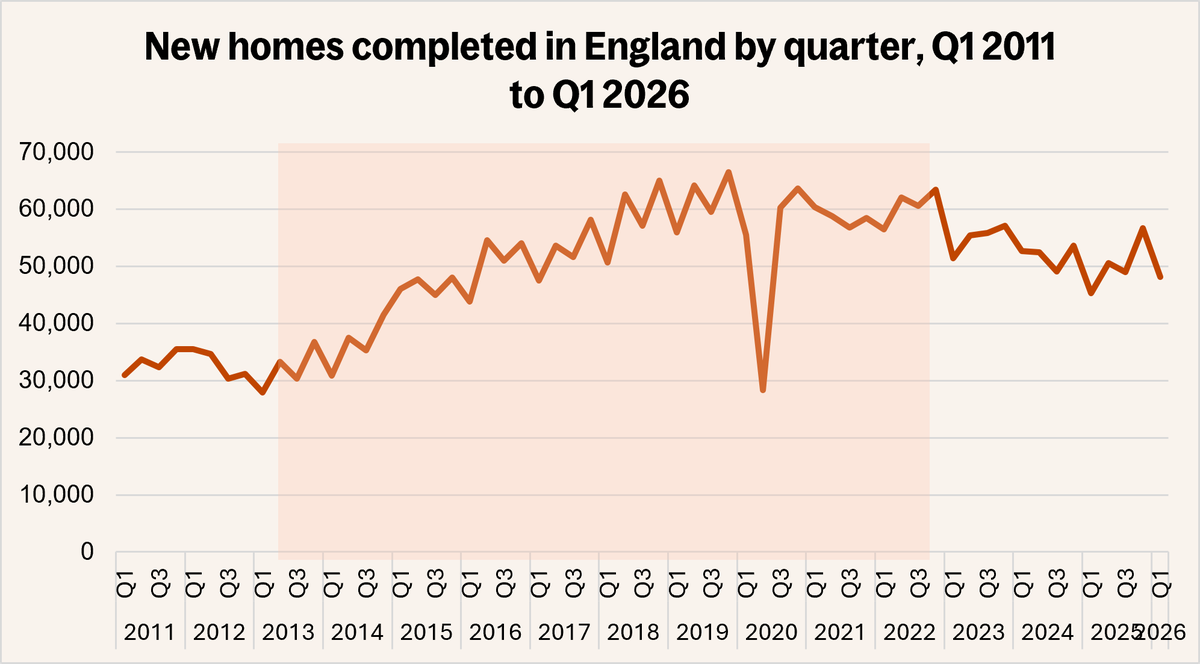
Help to Buy contributed to a significant increase in housing supply in the years that followed up until it closed to new homebuyers at the end of 2022 with final completions in early 2023.
Interventions before Help to Buy
The Help to Buy scheme followed a series of initiatives from different governments aimed at supporting first-time buyers onto the housing ladder and into new build homes. Policy interventions to promote and support home ownership had been a feature of the policy landscape and the housing market from the 1960s up to 2023.
During the 20th Century, the focus of these initiatives was largely focused on tax reliefs for mortgage payers. In 1967, Government introduced the Option Mortgage Scheme. The scheme gave homebuyers the choice of either tax relief on mortgage interest payments or a Government subsidy to reduce the interest rate on the mortgage. This was intended to support households who did not pay tax and would be unable to benefit from more common tax relief schemes.
In 1978, Government introduced Mortgage Interest Relief at Source (MIRAS). For a time, Dual MIRAS allowed two homeowners to claim double relief. By 1985/86, the scheme came at a cost of £4.75bn per year (Hansard, 12 May 1986: Col. 341). This is equivalent to around £15bn per year in 2024 prices.
The Right to Buy was an exception to the 20th Century orthodoxy around mortgage interest reliefs with a major government drive to discount council homes for tenants. With more than one million such transactions, the Right to Buy can be seen as the UK policy intervention that created the biggest surge in home ownership, but with no supply-side component the scheme merely saw the transfer of a large proportion of housing stock from one tenure (social rented) to another (owner occupation).
With this experience in mind and with a growing understanding of the emerging housing supply and affordability crises, around the turn of the millennium attention turned to directing home ownership support to delivery of new housing. Assisting first-time buyers and key workers onto the housing ladder would also help to stimulate housing supply by addressing the lack of higher loan-to-value mortgage lending on new build housing. The dearth of high LTV mortgages for new properties was exacerbated by a planning policy that promoted delivery of apartments over houses but with restricted mortgages available for new apartments.
The 2000s saw the focus turn to supporting first-time buyers to purchase new build homes with Government seeking to tie home ownership to economic growth and regeneration while guarding against pure demand-side stimuli. Indeed, it was during this time that the already significantly scaled down MIRAS was phased out.
The problem being solved by the 2000s was the discrimination against new build lending in the mortgage sector and a desire from the government of the day to increase home building rates. In short, the reliance on the mortgage market – and specifically the new build mortgage market, makes new housing supply even riskier than it would otherwise be and creates additional risks when weighing up investments.
Between 1999 and 2012, the government, often in partnership with house builders, unveiled equity loan schemes, shared equity initiatives and mortgage guarantee schemes. These included the First-Time Buyers Initiative (equity loan), HomeBuy Direct (shared equity), FirstBuy (shared equity) and NewBuy (guarantee) alongside similar schemes with particular focuses like the Rent to HomeBuy and Social HomeBuy schemes.
These schemes varied in theme with several focusing on key workers, but broader based schemes such as Homebuy Direct had at their core a shared equity arrangement with developers and government sharing the upfront costs. These were relatively modest in scale and the upfront capital requirements (often equivalent to 5-10% of the sales price) often meant that for developers these initiatives were the preserve of those companies with sufficient balance sheets, usually the largest 20-30 builders.
Homebuy Direct had been limited in its effectiveness because of conditions placed on participating home builders and on purchasers. As well as significant capital requirements for builders, the scheme was plot specific rather than market-led which required specific homes to be sold with Homebuy Direct mortgages to be identified early in the development process. For purchasers the initiative was more akin to an Affordable Housing product with the type of home available determined by the household size and composition of the purchaser(s).
Impact on housing supply
Although not exclusively attributable to the introduction of Help to Buy the impact of the scheme on housing supply in England is plain to see. By 2013, underlying economic indicators had already been going in the right direction for several years and (modest) growth in the economy had returned. However, housing supply had reached its peacetime nadir in 2012/13, five years after the main effects of the global financial crisis with 124,000 net additions recorded (136k gross). But despite the wider factors broadly tracking positively, homebuyers struggled to find affordable mortgage finance suitable for new build properties.
Critics of Help to Buy argued in the first couple of years of the scheme’s operation that it was having little impact on supply but by 2015 the additional confidence it had injected into the market and the strong forward visibility it created for builders, meant that land acquisition and investment in labour and skills eventually came to fruition.
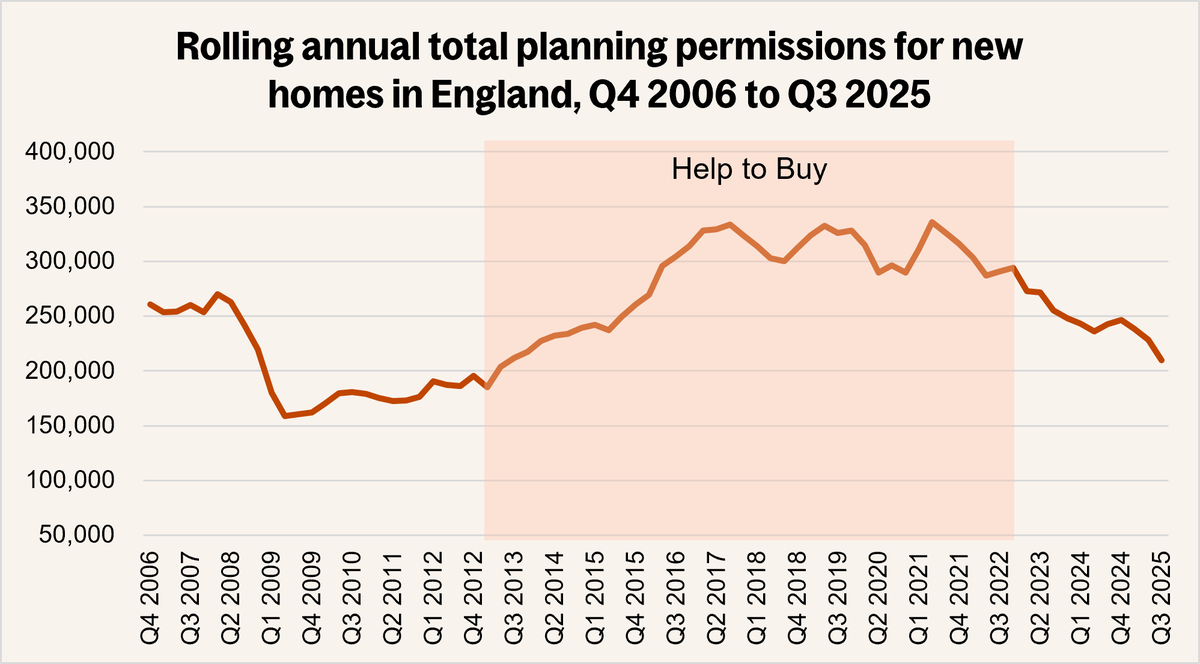
An obvious leading indicator, planning permissions immediately began to increase as a result. Prior to the 2013 Budget, the number of units being approved in a 12-month period was consistently between 150,000 and 200,000. By late 2015, this annualised figure exceeded 250,000. The trend continued throughout the first phase of the Help to Buy scheme, climbing to more than 330,000 at the peak – an 80% increase on the typical pre-Help to Buy outturn.
While, again, not wholly down to the withdrawal of Help to Buy, following the scheme’s closure investment in new sites and planning consents has declined consistently over the past four years. Wider economic factors have undoubtedly contributed to depressed investment, but greater uncertainty over forward effective demand is a large contributing factor.
By 2018, five years on from its introduction, housing supply in England had doubled. As sales increased, initially by around 40-50%, home builders who had taken a conservative approach to land acquisition and investment in preceding years found themselves building out their sites more quickly (where they could find adequate labour) and expanding their footprints. The combined effect of higher sales rates and more sales outlets drove what became the fastest increase in housing supply since the years after the Second World War.
In contrast with the period between 2008 and 2013, where mortgage availability for new build purchasers was frequently among the top barriers to delivery, almost immediately after the scheme was introduced, availability and cost of mortgage finance barely registered as a barrier to growth in home builder surveys.
Once again, following the closure of the scheme, output declined steadily to around and below the 200,000 homes per year mark.
Addressing the ‘inflationary’ arguments
A common criticism of Help to Buy has centred its impact on new build house prices. It is argued by some that the scheme results in new homes being overvalued.
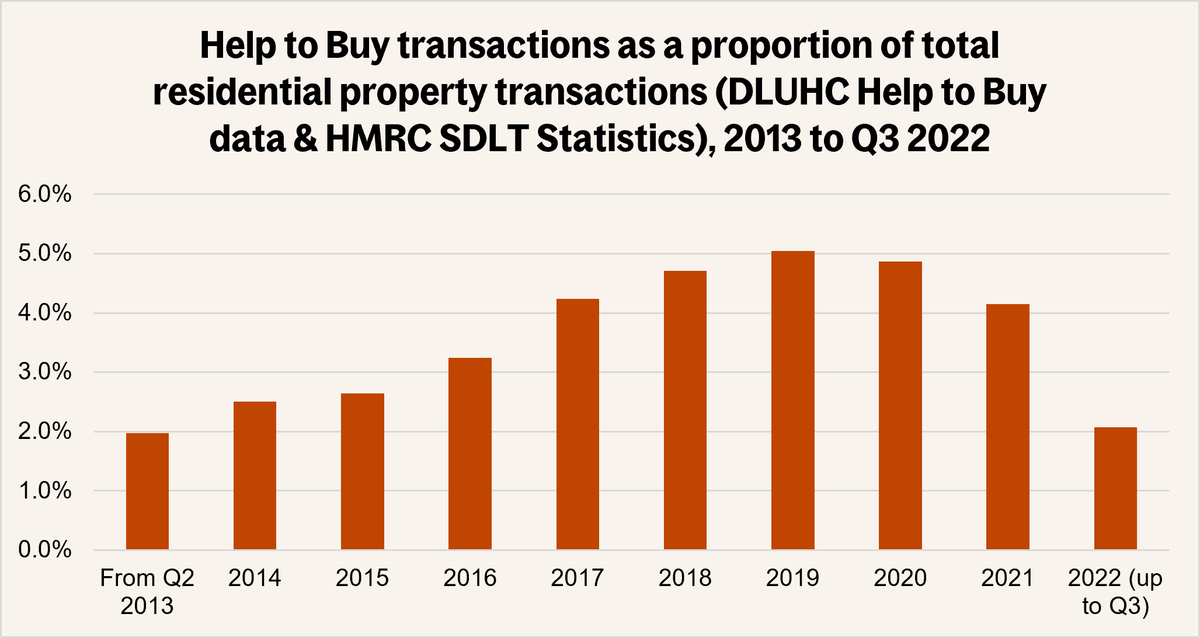
New homes represent a small fraction of the overall housing market and so new build house prices are driven by wider housing market dynamics and typically valuations on behalf of lenders ensure that new build prices are assessed according to local housing markets dominated by older properties. Help to Buy transactions peaked in 2018 and 2019. These were the final years in which the scheme was open to home movers as well as first-time buyers and before the introduction of regional price caps. In both years, just over 52,000 Help to Buy completions were recorded, coinciding with the highest number of new homes produced in England since the 1960s (250,000 in 2018/19 and 251,000 in 2019/20). Over this period, Help to Buy completions accounted for between 4.5% and 5.0% of all residential property transactions.
Even at these peaks, it seems implausible to argue that such a small subset of the housing market can be responsible for the house price inflation of the entire market, especially when the supply-side benefits of the scheme are factored in alongside the obvious demand-side drivers.
If the suggestion that Help to Buy was inflationary across the entire market feels unlikely, it is worth considering an argument that Help to Buy inflated new build prices specifically. For the reasons touched on above, it is important to have in mind how valuers assess new build homes on behalf of mortgage lenders and their customers. New build is valued according to local market dynamics. However, new homes with new fixtures, fittings and appliances and built to the very latest energy efficiency standards (and rising again as of 2022 before rising again in 2025), do generally cost more than second hand homes.
It is argued by critics that Help to Buy inflated new build prices. This argument comes in two forms. The first is that builders simply raised prices, stretching the ‘new build premium’ further than before. The second is that, because buyers had greater affordability as well as a lower deposit requirement, builders changed the type of new homes being built with a greater proportion of houses being built compared with flats.
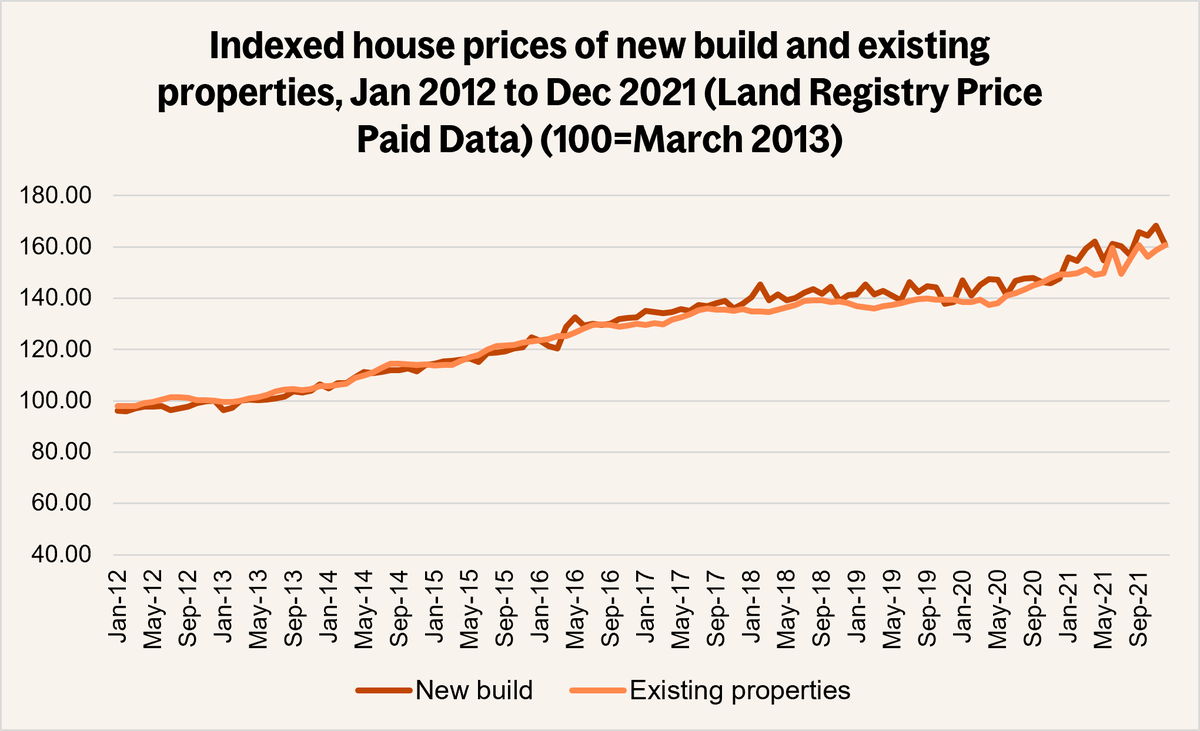
The chart below, using paid price data from the Land Registry shows a strong correlation between prices in the new homes and existing homes markets even despite a much larger proportion of new homes comprising larger family homes in recent years compared with the early 2000s when around 50% of all new properties were flats.
Average new build prices between March 2013 (the month before the scheme was introduced) and December 2021, increased by 60.85%. By comparison, the average price of existing properties purchased in December 2021 was 60.77% higher than in March 2013.
Supporting today’s homebuyers: HBF proposal for a new equity loan scheme using contributions from home builders
The time is right for a new generation of homebuyers to be supported by government to take their first steps on the housing ladder and into a new, energy efficient home.
Building on experience with previous schemes going back to the 1960s, it is clear that an equity loan scheme over other alternatives such as shared equity, mortgage interest tax reliefs or guarantee schemes, provide significant stimulus for housing supply and allow for developers of all sizes to provide their customers with access to the assistance.
A new 20% equity loan scheme, supported by a developer contribution could help to transform the new build housing market, reduce investment risk and help to deliver new homes. HBF has proposed a structured developer fee beginning at 1% of sales price and rising over time based on the number of customers a builder has provided access to. In practice this would mean that larger developers pay a higher fee than SMEs and therefore allow for universal access across the market.
A new equity loan scheme could also assist government in achieving other housing policy objectives. For example, local connection tests could support the government’s objective to deliver a ‘First Dibs’ opportunity for local people. If pursued, a broad definition of locality would be advisable. Linking local connection purely to the local authority area fails to reflect the real-life experiences of households but such a ‘bolt-on’ could entail a proportion of equity loans on each site being dedicated to households with a connection such as living or working within 10 miles of the site or working in a school, hospital or other public workplace within a certain radius.
The need for a new intervention to assist a new generation of first-time buyers grows with every passing week. It has never been harder to access home ownership and dwindling affordability is having a direct impact on investment into new housing delivery.
Over recent years, the misguided and unevidenced opposition to the Help to Buy experience has rightly receded as the true impact of the scheme is now better understood. Publication of the Help to Buy evaluation alongside the introduction of a new equity loan scheme would help to further inform commentators and give hope to a ten of thousands of households locked out of home ownership.