Last updated: 9 Mar 2026
Alleviating the impact of nutrient neutrality on home building
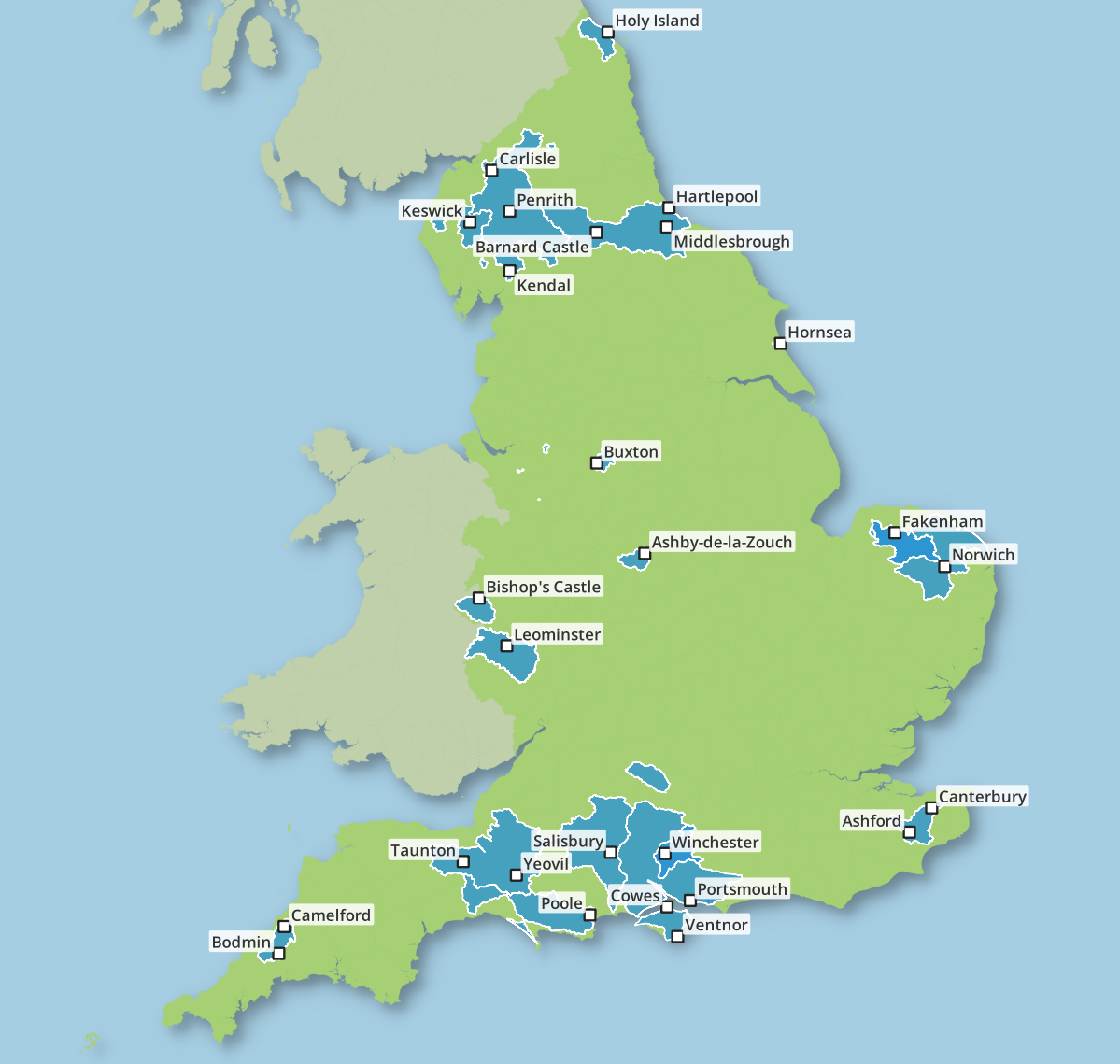
In June 2019 Natural England issued advice to 74 local planning authorities, preventing them from granting planning permission for new homes unless nutrient neutrality could be demonstrated. This was the case despite
evidence that the occupancy of new homes makes a negligible contribution
to nutrient levels in rivers - less than 1%.
We have been representing our members to build understanding of the issue, its causes, and the consequences for home building, calling for Government interventions to lift the disproportionate moratorium on home building.
Understanding the impact of the issue
160,000 homes were blocked
Estimates suggest that at the height of the issue 160,000 homes were blocked by Natural England's requirement for residential schemes to demonstrate nutrient neutrality.
41,000 fewer homes delivered each year
The impact was that an estimated 41,000 fewer new homes were built each year as a result of delays in Government finding viable solutions to the issue.
Home builders face costs of up to £60,500
Mitigation costs vary from £3,200 to £60,500 depending on a site's size, the permit limit of the wastewater treatment works a development connects to, and the development's ability to incorporate a sustainable drainage scheme.
What is the nutrients issue?
High levels of nutrients (such as nitrogen and phosphorus) in freshwater habitats and rivers can cause excessive growth of algae and bacteria, which pollutes the water.
Government’s research has found agricultural run-off and the inaction of water companies to maintain infrastructure to be the overwhelming causes of the nutrients entering our waterways.
Following representations made by HBF, the Government has given water companies until March 2030 to improve the nutrient performance of wastewater treatment works. This will reduce the volume of mitigation home builders will need to provide significantly. The Government is also acting with the farming sector to reduce agricultural run-off.
Planning permission for development in affected catchment areas will only be granted if mitigation measures are in place to achieve ‘nutrient neutrality’. The supply of nutrient mitigation solutions is very mixed. Some catchments are well served, like the Solent; others far less so, like the River Eden.
Home builders have had to learn quickly – and at great cost - how to mitigate schemes caught by Natural England’s advice. Sometimes this has involved very costly solutions like buying and decommissioning trout or pig farms.
The delays associated with nutrient neutrality have caused great harm to housebuilding businesses, especially small- and medium-sized builders. Developer contributions for affordable housing and community infrastructure have been diverted away to pay for mitigation.

Contributors of nutrients
In 2023, we published a report with Brookbanks to highlight the minimal contribution made by residents of new homes towards nutrient levels in rivers.
The report finds that the occupancy of new homes accounts for just 0.29% of total nitrogen emissions each year and 0.73% of total phosphorus. (nitrogen and phosphorus make up ‘nutrients’).
The research also puts nutrient output from residential properties in the context of agricultural activities which is responsible for around 70% of the nitrogen that finds its ways into rivers and streams. Each dairy cow in affected areas produces Nitrogen discharges equivalent to 29 homes while each sheep is responsible for the same amount of Nitrogen as three family homes.
Our asks of Government
HBF welcomes the Government’s action to improve the performance of wastewater treatment works, required by the Levelling Up and Regeneration Act 2024.
The Nature Restoration Fund, introduced by the Planning and Infrastructure Act 2025 should also prove helpful in those catchments where it is implemented.
However, it is uncertain whether either of the these measures will be entirely effective, and the cost of mitigation will continue to be an issue, causing developer contributions to be diverted away from the supply of affordable housing and community infrastructure at a time when the viability of development in large parts of the country has become a major obstacle to delivery.
We're calling on Government to...
Bring forward new legislation
We want Government to bring forward new legislation to remove the barrier to home building caused by Natural England’s nutrient neutrality advice. This could be justified on the basis of the negligible contribution occupants of new home building make to nutrient levels - especially when balanced against public interest considerations.
If Government this legislation is not brought forward, we recommend the following actions:
Push through the Nature Restoration Fund
Once Natural England has produced the first Environmental Delivery Plans, they will need to be considered by Parliament. The Government must robustly defend Environmental Delivery Plans from those who will look to undermine them.
Accelerate and complete Environmental Delivery Plans for each catchment
Environmental Delivery Plans will not make the cost of mitigation cheaper but they potentially reduce for the bureaucracy associated with calculating and procuring a nutrient neutrality solution. The Government should ensure that local authorities understand the difference between their responsibilities and those of Natural England.
Review the nutrient calculator
In the short term, Government needs to commit to working with Natural England to review its nutrient mitigation calculator to reflect the net household occupancy size in each catchment.
Hold water companies to account
Require water companies to account for how they spend developer fees and invest in their networks to meet the future housing needs of the population. The Government should also ensure that water companies are undertaking the investment required by law to improve the nutrient performance of wastewater treatment works.
Extend planning permission
Extend planning permission for sites in affected catchments that have been held up due to nutrient neutrality requirements.
Useful resources
Nutrient Neutrality Solutions Finding report
Published by HBF, this Lichfields report was published in 2024 and identifies solutions to Natural England’s disproportionate ban on building new homes.
Nutrient neutrality boundaries
This Natural England-Defra open data source also shows the various nutrient neutrality catchment boundaries in detail.
Nature Restoration Fund (NRF) implementation plan
Government’s implementation plan sets out how the NRF will operate in practice.
Our work on the issue
Our reports and research


Nitrogen exemptions for farmers

Contact us
If you would like to be involved in our work or have a question about activity, contact the team at info@hbf.co.uk