Last updated: 10 Mar 2026
Understanding the impact of nutrient neutrality on housing development in Wales
Nutrient neutrality affects development in both England and Wales; however, there are key differences in how the requirements are regulated and monitored.
In January 2021 Natural Resources Wales (NRW) published evidence showing that 60% of rivers in Special Areas of Conservation (SAC) were failing phosphate targets. Nutrient neutrality requirements were subsequently introduced, halting many development projects across Wales - despite evidence that the occupancy of new homes makes a negligible contribution to nutrient levels in rivers - less than 1%.
Wales’ approach to nutrient neutrality
Wales’ approach to nutrient neutrality is aligned with broader UK requirements but has been shaped by local policy drivers and the regulatory roles of NRW and the Welsh Government. Rather than a single policy announcement or legislative change, interventions have evolved incrementally, in response to deteriorating water quality conditions and the need to ensure compliance with the Habitats Regulations 2017.
In 2021, Natural Resources Wales (NRW) published evidence showing that 60% of rivers in Special Areas of Conservation (SAC) were failing phosphate targets. Nutrient neutrality was subsequently introduced, halting many development projects across Wales.
Although originally focused on limiting new developments in Special Areas of Conservation (SAC) river catchments to prevent increases in phosphorus pollution, in June 2025 NRW issued guidance on marine nitrates which resulted in an immediate pause on new housing development and impacted the progress of Local Development Plan (LDP) reviews in the affected areas.
The requirements were subsequently updated in September 2025 to cover all forms of Dissolved Inorganic Nitrogen -such as nitrate, nitrite, and ammonia - that can contribute to nutrient pollution, rather than focusing solely on nitrates. This means the nutrient neutrality requirements in Wales have wider implications for development than those currently applied in England.
A Welsh Government Task Force was subsequently formed in October 2025. The taskforce is made up of key stakeholders, affected Local Planning Authorities and Welsh Government officials.
Although HBF does not sit on the Task Force we do receive minutes of the meetings and have been invited to present to meetings.
Differences in approach
While the overall principles of nutrient neutrality are aligned, there are key differences between the approach taken by Governments in England and Wales.
Geographic scope
England uses Nitrate Vulnerable Zones (NVZs), whereas Wales applies adapted regulations across the entire country
Nitrogen focus
Wales now considers all forms of dissolved inorganic nitrogen (DIN), not just nitrates, meaning the requirements have broader scope.
Guidance sources
Advice is issued separately by Natural Resources Wales (NRW) and Natural England, tailored to local catchments.
Catchment mapping
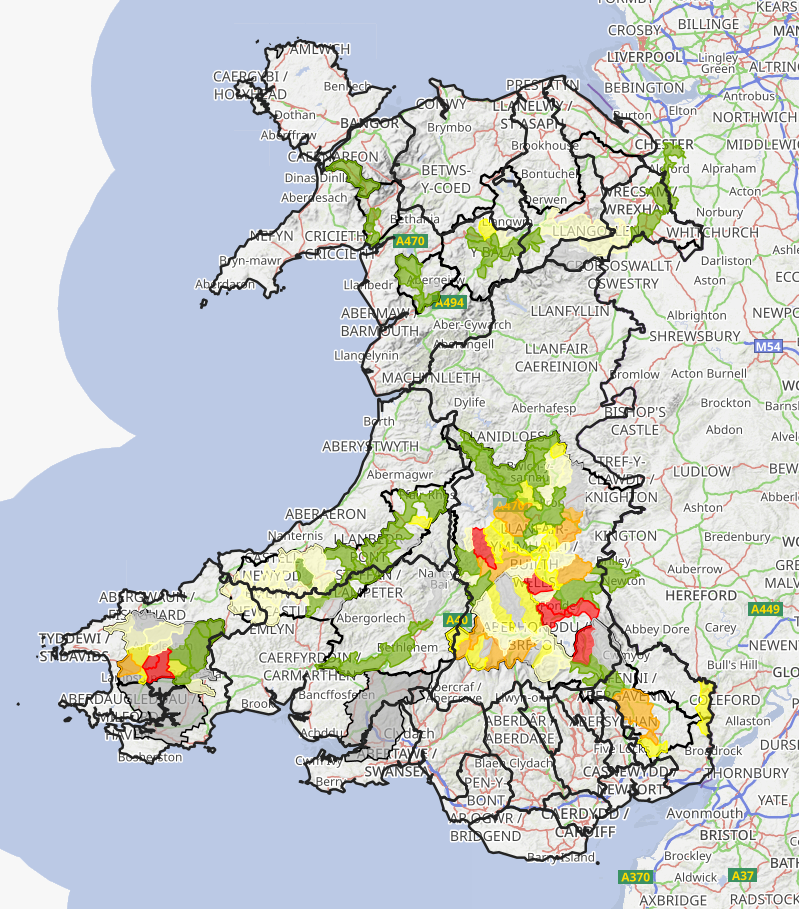
NRW will publish GIS maps of affected catchments to guide Local Planning Authorities (LPAs) in Wales.
Policy context
England is exploring reforms to streamline nutrient neutrality requirements, including potential legislative changes. In Wales, LPAs are expected to follow NRW’s advice until further updates are issued, with no plans for an equivalent policy intervention.
Useful resources
NRW guidance
Natural Resources Wales’ (NRW) guidance provides the latest regulatory expectations and recommendations for nutrient management in planning applications across Wales.
Wales nutrient budget calculator
Wales offers its own nutrient budget calculator, designed to help home builders and planners assess nutrient contributions and requirements for proposed developments.
Data Map Wales
This live data map enables you to map locations across the country that are affected by the phosphates issue.