
What do the latest estimates of housing need mean for the next Welsh Government and the home building industry?
Policy and Campaigns Officer, Laurence Thompson, provides an overview of the latest estimate of Wales' housing need - and urges the next Welsh Government to make urgent interventions to boost supply and create a more supportive policy environment for home building.
The elections for the Welsh Parliament in May will be a pivotal moment for the home building industry in Wales.
If polls are to be believed, either Plaid Cymru or Reform UK could lead the Welsh Government for the first time. Whoever takes office, a shift in the policy environment for home building now appears inevitable.
How should we measure the success of the next Welsh Government in tackling the housing crisis?
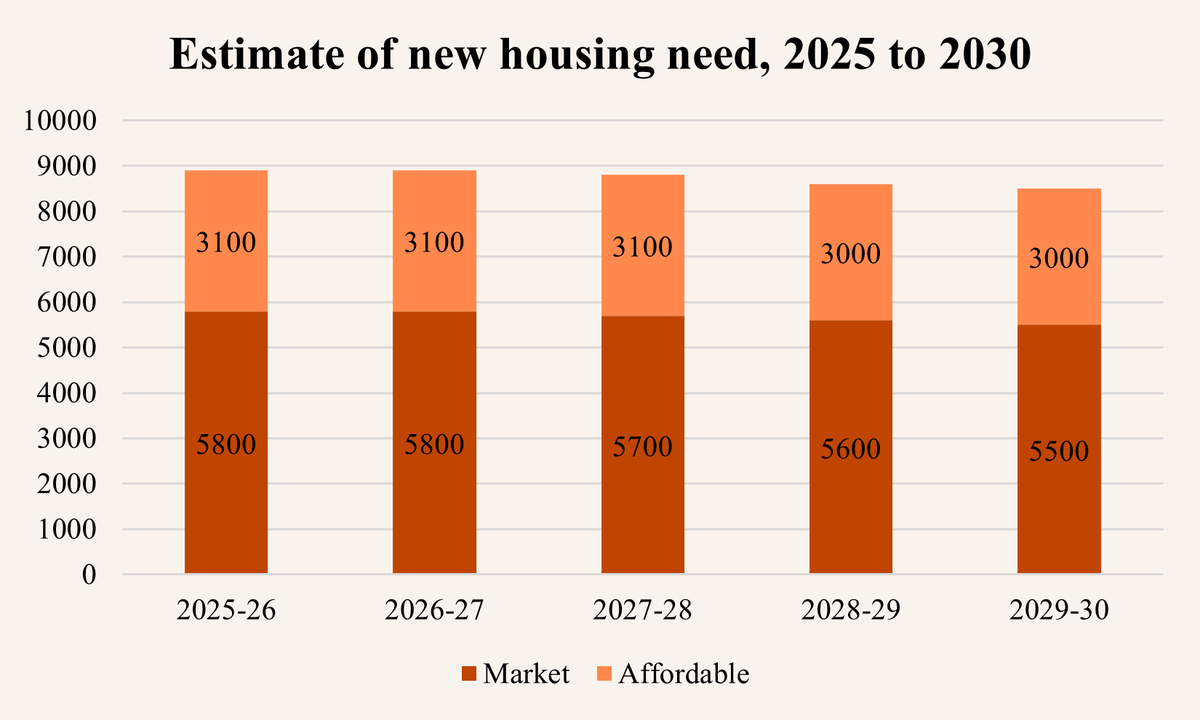
While not a formal housing target, the Welsh Government’s latest estimates of additional housing need provide a benchmark for the level of ambition that is required in the next Senedd term. The estimates show that around 8,700 new homes per year are needed up to 2030 simply to keep pace with household growth – even before considering the need to address the existing housing backlog of unmet need.
The latest figures, the first update to Wales’ estimate of housing need since 2019, show that:
- There is existing unmet need of 9,400 affordable homes in Wales – a 64% increase from 2019. This includes homeless, overcrowded and concealed households.
- Around 8,700 new homes are estimated to be needed every year up to 2030 to meet newly arising need, based on household formation and population growth projections.
- Of this newly arising need, around 65% (approximately 5,700 homes per year) is estimated to be for market housing, and 35% (approximately 3,000 homes per year) for affordable housing.
- Over a longer period, the Welsh Government’s projections suggest that around 160,000 additional homes are needed across Wales over the next twenty years.
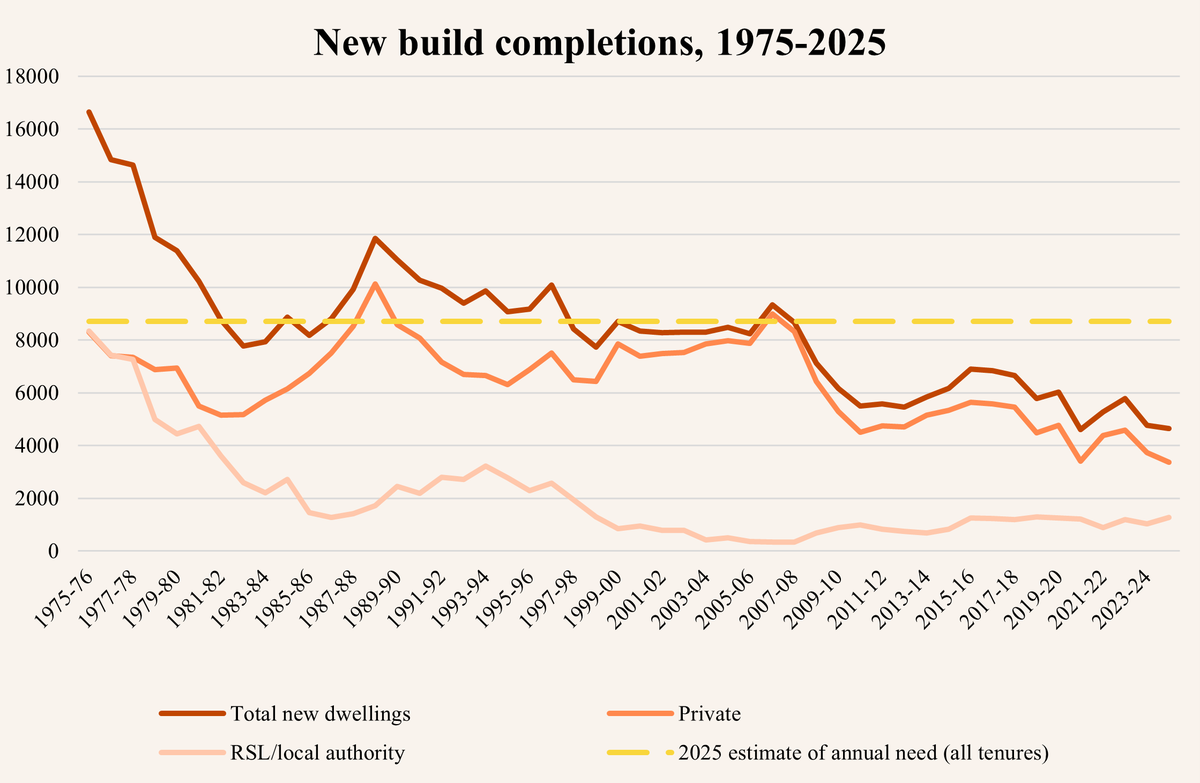
Based on current levels of supply, scaling up delivery to meet this ambition will be extremely challenging. Affordable housing delivery has remained comparatively resilient in recent years, with the number of affordable homes delivered in 2024/25 up 12% on the previous year, but market housing delivery continues to plummet, meaning overall output is falling far short of what is needed. In total, just 4,638 new homes were delivered in 2024/25 - the second-lowest year of new build delivery on record. The average annual delivery rate for new homes during the current Senedd term was only 5,100 homes.
Therefore, even allowing for acquisitions and conversions, supply is clearly well short of the 8,700 a year required to meet new housing need.
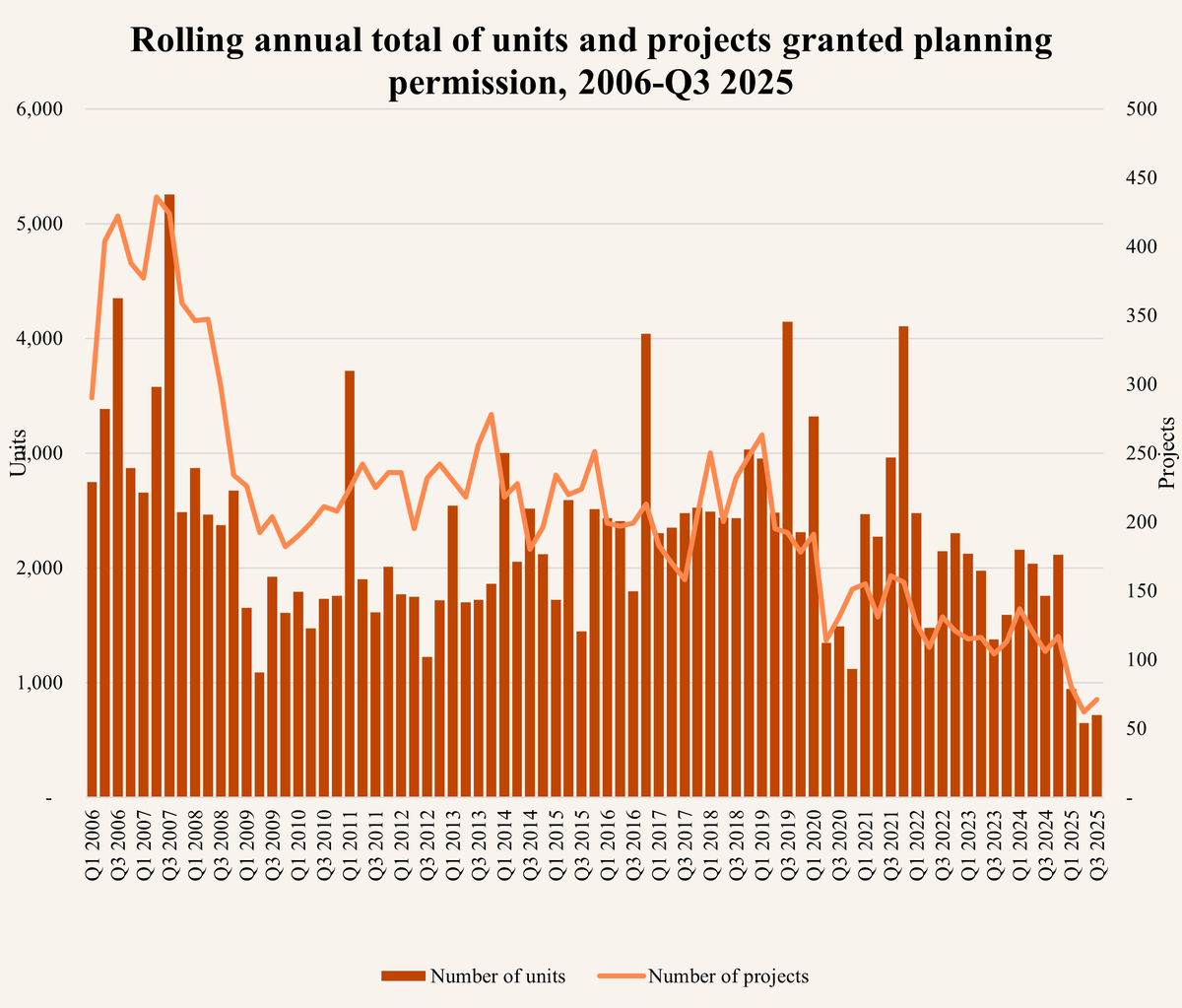
Planning permission approvals, a key leading indicator of future supply, are also in steep decline. Data from HBF’s Housing Pipeline report estimates that, in the year to September 2025, around 4,400 homes received planning permission, down 41% from 7,500 in the year to September 2024.
The challenge of increasing supply to necessary levels is daunting. However, Wales regularly delivered over 8,000 new homes a year up until the financial crisis in 2007/08. With enough political will and the right policy and planning environment in place, meeting Wales’ housing needs is achievable for the next Welsh Government.
A blueprint for increasing supply
What practical steps can the next Welsh Government take to increase supply and meet housing need?
In September, HBF released its blueprint for increasing housing supply in Wales. The blueprint sets out several priority areas where action is needed to support an increase in housing supply of all tenures.
Housing targets
First, Wales urgently needs an all-tenure housing target, similar to England’s 1.5 million homes commitment. The Welsh Government has a target of 20,000 new social homes for the current Senedd term, and this emphasis on delivering Affordable Housing is needed, but there is no equivalent target for market housing. It is no coincidence that market housing delivery has fallen sharply.
Establishing an all-tenure target would have the benefit of galvanising the system into action, setting a clear objective for all levels of government that more homes must be delivered. Furthermore, it is important to recognise that delivering more market housing will have the knock-on effect of increasing the delivery of Section 106 Affordable Housing. Indeed, the private sector currently delivers around a third of all new build Affordable Homes through the Section 106 route. An all-tenure target would better reflect this interdependence between market and affordable housing.
A logical place to start in setting a formal government target would be adopting the estimates of housing need, equating to a target of around 35,000 new homes for the next Senedd term (or potentially higher if taking into account existing need).
Local Development Plans
Second, full coverage of up-to-date Local Development Plans (LDPs) must also be a key priority. When first introduced in 2005, it was envisaged that LDPs would be replaced once expired and reviewed every four years. However, 11 out of 25 LDPs are now expired, while progress on their replacements is extremely slow, with a number of local authorities slowed down by Welsh Government interventions or starting the process again after several years of work.
Expired LDPs ultimately lead to fewer new homes coming forward, as these out-of-date plans often contain unviable and undeliverable site allocations, limiting the ability of house builders to bring new applications forward. HBF is calling for the next Welsh Government to enable faster adoption of LDPs by increasing the use of short-form reviews and introducing stronger statutory deadlines for adopting local plan reviews.
Viability
Third, the viability crisis in Wales can no longer be ignored. Lower average land values, coupled with increased material and labour costs in recent years and a wave of new policy requirements, have meant that fewer and fewer sites are viable for development in Wales. New policy requirements introduced in recent years include mandatory sprinkler systems, sustainable drainage systems, Part L energy efficiency standards, and an increase in Affordable Housing requirements up to 50% in some areas. While each measure has a justifiable policy rationale, the cumulative impact has made fewer sites viable to developers and driven potential investment by national house builders from Wales to other parts of the United Kingdom.
At a minimum, the next Welsh Government must ensure no new policy requirements are introduced that worsen viability. More broadly, if the next Welsh Government is serious about increasing housing supply, it will need to face the difficult trade-offs and decide which policy goals should be prioritised through development, easing the overall regulatory burden.
Help to Buy Wales
Finally, it is vital that Help to Buy Wales is extended beyond the current deadline of September 2026, and that the scheme is expanded so it can further support increased supply. HBF research shows that the scheme has supported 4,400 jobs and generated £240 million in economic activity every year on average, as well as supporting around 15,000 households into home ownership and making a net return to the Welsh Government of over £40 million so far.
Home builders operate on assumptions about the market over multi-year time horizons, so extending the Help to Buy Wales scheme for the rest of the next Senedd term would further support industry confidence to invest in new homes. Without confidence in effective demand and a strong first-time buyer market, investment in new housing will continue to fall.
In addition, to increase take-up to similar levels as when the scheme was first launched, and to further support increased supply, the purchase price cap for Help to Buy Wales should be raised in those areas where average first-time buyer house prices have risen above £300,000.
HBF’s blueprint includes many other recommendations aimed at increasing housing supply and tackling the housing crisis – from increasing planning resources to fixing the SuDS process and developing the skills pipeline.
A pivotal moment
Whoever forms the next Welsh Government in May will inherit a challenging outlook for overall housing supply. The latest estimates set out the scale of housing need and provide a benchmark against which progress in tackling the housing crisis can be judged.
Given the scale of the challenge, the industry hopes that the next Welsh Government will take urgent action to boost supply and create a more favourable policy environment for home builders to deliver new homes and meet Wales’ housing need.