SME Developer Sentiment Survey August 2026
SME home builder confidence in future investment weakens amid growing concern about the impact of the incoming Building Safety Levy
Introduction
The third quarterly SME Developer Sentiment Survey to be published by Home Builders Federation (HBF) and Quantum Development Finance (QDF) shows that confidence among SMEs has continued to plummet amid a lack of action from Government to support the industry.
The Q3 2026 survey, which received 114 responses from SME home builders operating across England and Wales, provides a broad picture of the challenges facing smaller developers. Respondents range from businesses delivering a handful of homes each year to those building several hundred annually, with the South East, South West and East of England among the most represented areas.
The findings suggest that caution remains firmly embedded across the SME sector. Expectations for land acquisition and housing starts remaining subdued, and the overwhelming majority of respondents report that current market conditions are influencing their willingness to bring forward new sites.
At the same time, the survey results highlight the structural challenges facing SME developers. Development viability and planning delays are identified as the two largest supply-side constraints, while low buyer confidence and wider housing market conditions remain the most significant barriers on the demand side.
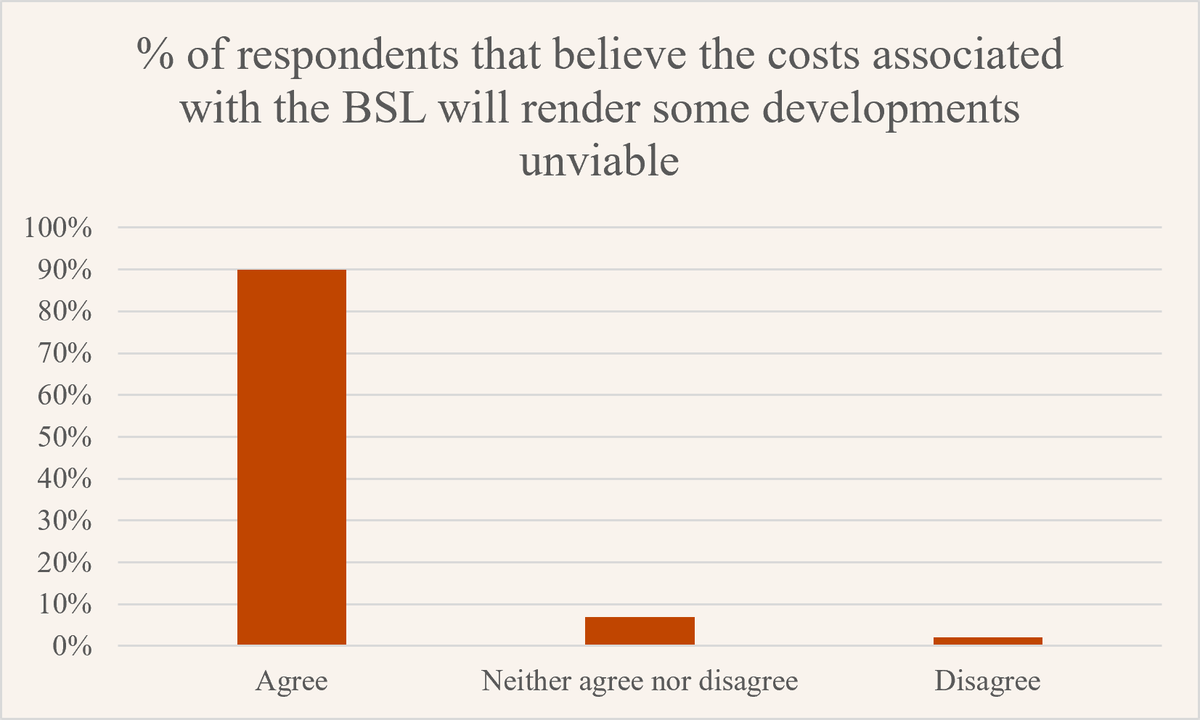
The imminent introduction of the Building Safety Levy also emerges as a significant concern. Nine in ten respondents agree that the costs associated with the levy will render some developments unviable, while more than a third say they have already delayed, redesigned or cancelled schemes because of it.
About this survey
The SME Developer Sentiment Survey tracks changes in SME home builder confidence over time and provides robust evidence to policymakers on the barriers preventing smaller firms from growing. While the policy challenges facing SME home builders are well documented, the survey results provide a greater understanding of how these barriers are being experienced in practice and the extent to which they are influencing business confidence and investment decisions.
The third quarterly HBF and Quantum Development Finance Sentiment Survey ran from 15 July until 1 August. A total of 114 SME developers participated, in line with the 110 responses in the previous survey. The survey was open to all SME home builders, not solely HBF members.
Demographics
Homes built per annum
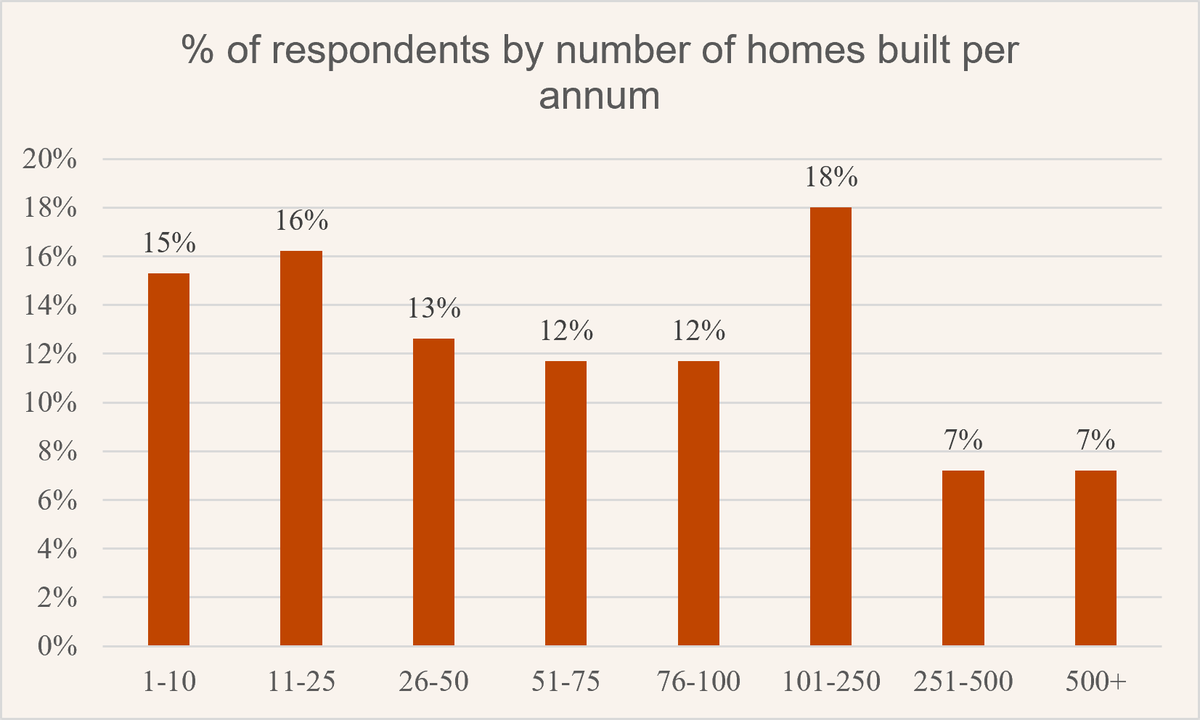
There is no single fixed definition of what constitutes an SME developer. For the purposes of this survey, and to capture a full range of perspectives, we accepted responses from developers building anywhere from a handful of homes to around 500 per year.
As in previous quarters, respondents represented a broad cross-section of SMEs. Those building under 100 homes a year represented 68% of respondents, similar to the representation in Q2 survey results.
Areas of operation
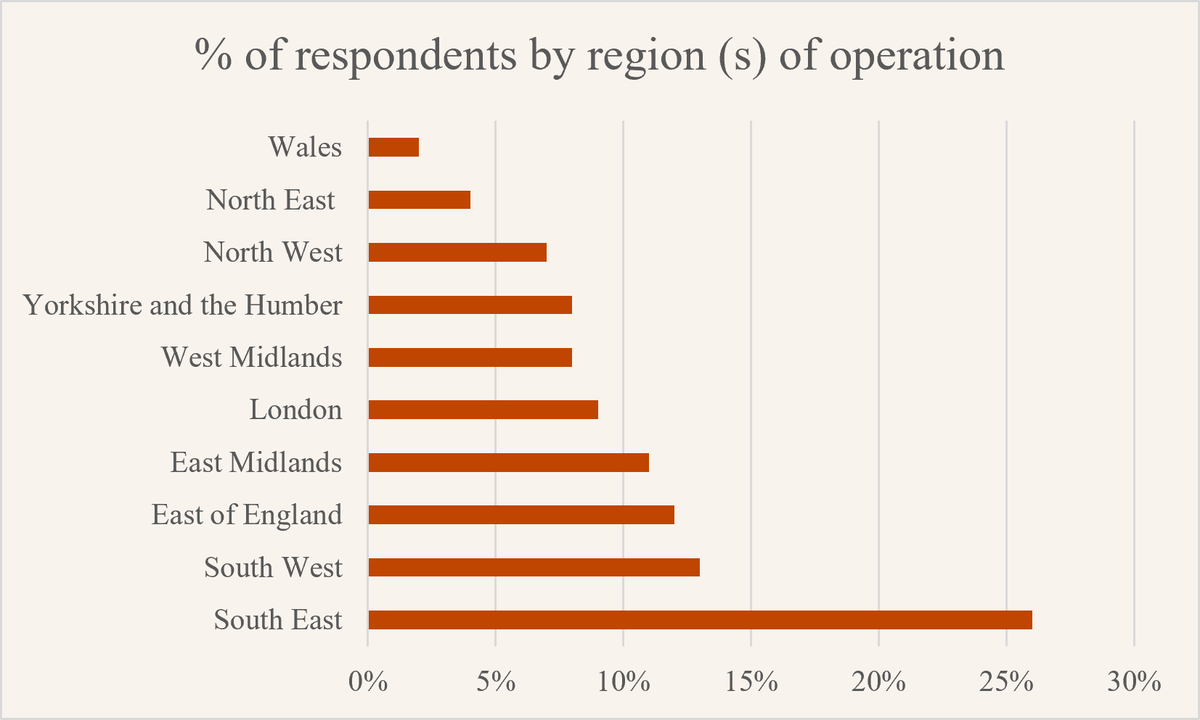
The survey received responses from developers operating across all English regions and Wales. As in the first quarterly survey, the South East had the highest representation, with 26% active in the region. The South West (13%), the East of England (12%) and the East Midlands (11%) were also well represented. Overall, the geographical profile of respondents was broadly similar to that of the previous survey, allowing meaningful comparisons of sentiment.
What home builders want to see from the new government
Given the recent change of Government, respondents were asked what actions by the new political leadership would have the greatest impact on their confidence to invest in new housing developments.
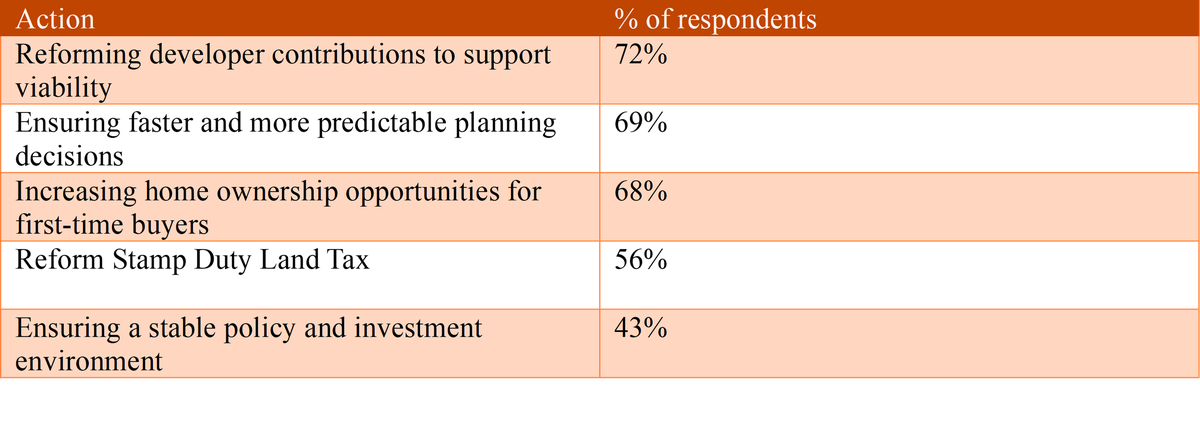
The main change that respondents wanted to see was reforms to the developer contribution system to support viability (72%), closely followed by ensuring faster and more predictable planning decisions (69%). Support for the demand side of the market also featured highly among respondents, with 68% calling for increased home ownership opportunities for first-time buyers, and 56% calling for reforms to Stamp Duty Land Tax.
The top five actions identified by respondents are displayed in the table below.
The findings reinforce much of HBF’s calls to government in recent months – that a combination of viability and demand constraints is the biggest threat to attempts to increase home building output. While planning has been at the top of the list for many years, and still remains an issue, the government must turn its attention to other issues that are causing home builders to abandon projects or leave the industry altogether.
Impact of the Building Safety Levy
The Building Safety Levy is due to come into force in October this year. The introduction of the levy sits alongside a long list of other policy costs, inflationary costs and taxes that have been introduced in the last six years.
HBF’s recent Viability Crunch report found that the cost of building a typical new home has increased by around £76,000 over the past five years. The Building Safety Levy accounts for £2,320 of this increase, adding further pressure to the viability of sites.
Nine in ten respondents to the survey agreed that the costs associated with the BSL would render developments unviable, and over a third (36%) said they had already delayed, redesigned or cancelled schemes because of the levy.
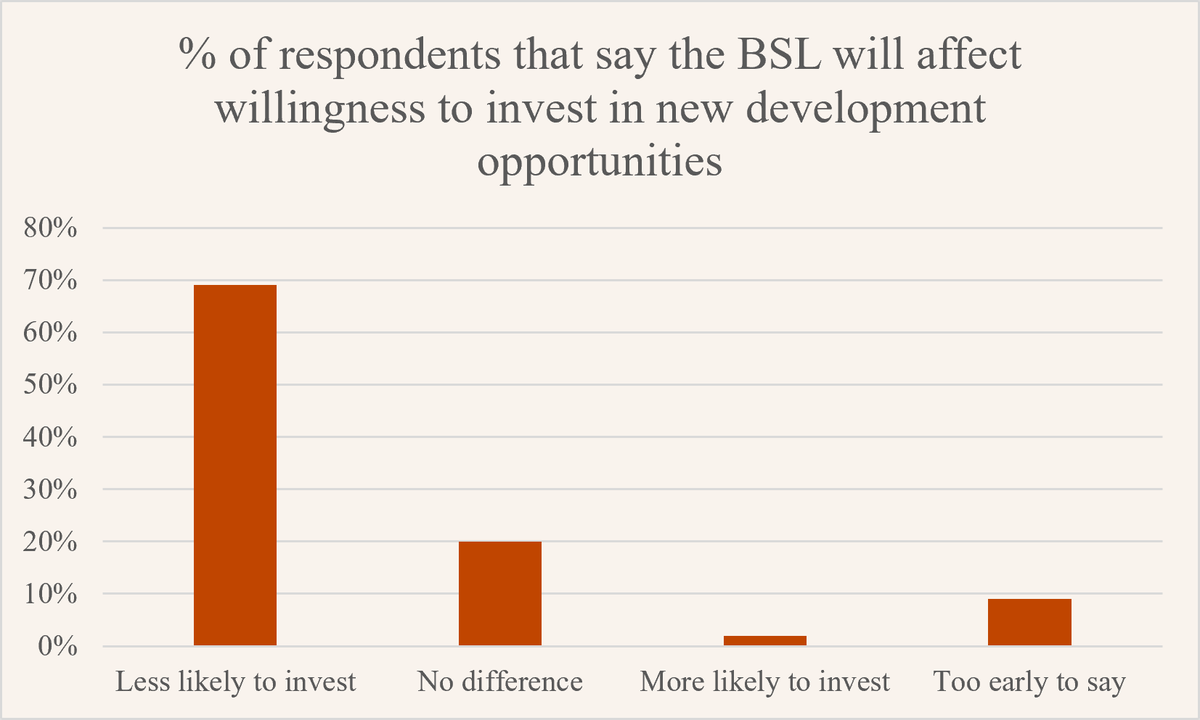
69% of respondents said that the introduction of the BSL would make them less likely to invest in future development opportunities. For a sector already highlighting viability as its biggest supply-side challenge, the findings suggest that the additional cost burden associated with the levy could further constrain the delivery of smaller developments.
There was a significant variation between the regions as to the perceived impact of the Building Safety Levy. Unsurprisingly, businesses based in London had the greatest proportion of respondents cite that the BSL would affect willingness to invest in new development opportunities, at 87%.
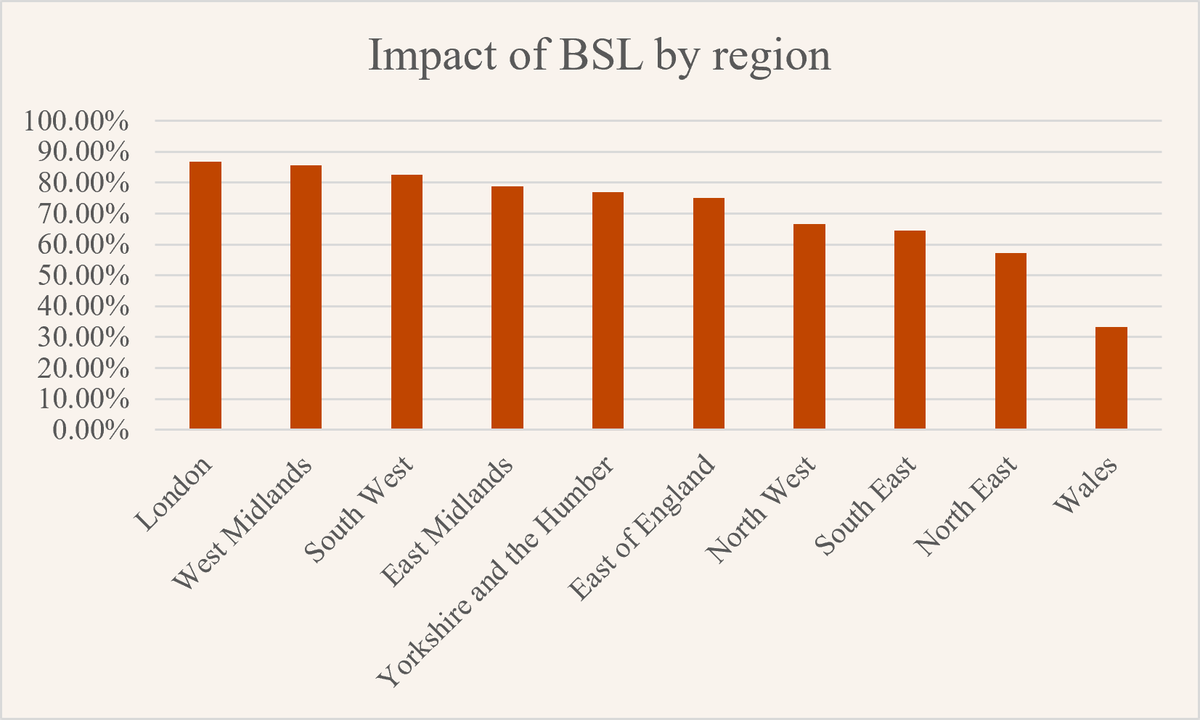
As the structure of the levy is set according to local house prices, this will disproportionately hit housing delivery in London. The Levy will also disproportionately affect the viability of apartment schemes, as the total levy payable will be determined by the gross floorspace of a development, therefore including all unsaleable space in the calculation. With a higher proportion of high-rise development occurring in London, investment in the capital will be further hit by the introduction of the Levy.
HBF has long called for the Government to reconsider the introduction of the BSL. The home building industry has already committed billions of pounds in funding for the building safety crisis, through the Residential Property Developers Tax and self-remediation commitments. There needs to be a more thorough analysis conducted before proceeding with the levy, which examines the number of buildings that need remediating and considers how the tax will affect the delivery of both private and affordable homes.
Land purchases
Confidence in future investment weakened further during the quarter. More than half of SME developers expect to purchase less land in the next three months, with 31% responding that they expect to purchase significantly less. The overall balance of -39% is down a further 8 percentage points compared to the previous quarter, and significantly down on the +5% that we saw in Q1.

Construction of new homes
This deterioration in confidence can also be seen by the decrease in the number of respondents who intend to start the construction of more homes in the next three months.
A net balance of -28% of respondents expect to increase output over the next three months, down slightly on Q2’s figure of -23%.

This cautious outlook reflects the wider challenges facing SMEs, with developers having to balance construction costs, planning and regulatory requirements against uncertain demand and the ability of purchasers to afford new homes.
Housing market outlook
The outlook for the housing market over the next three months remains challenging, although sentiment varies between regions. Negative sentiment is particularly evident in the South West and East and West Midlands and the East of England, while the North West and Wales show comparatively greater resilience.
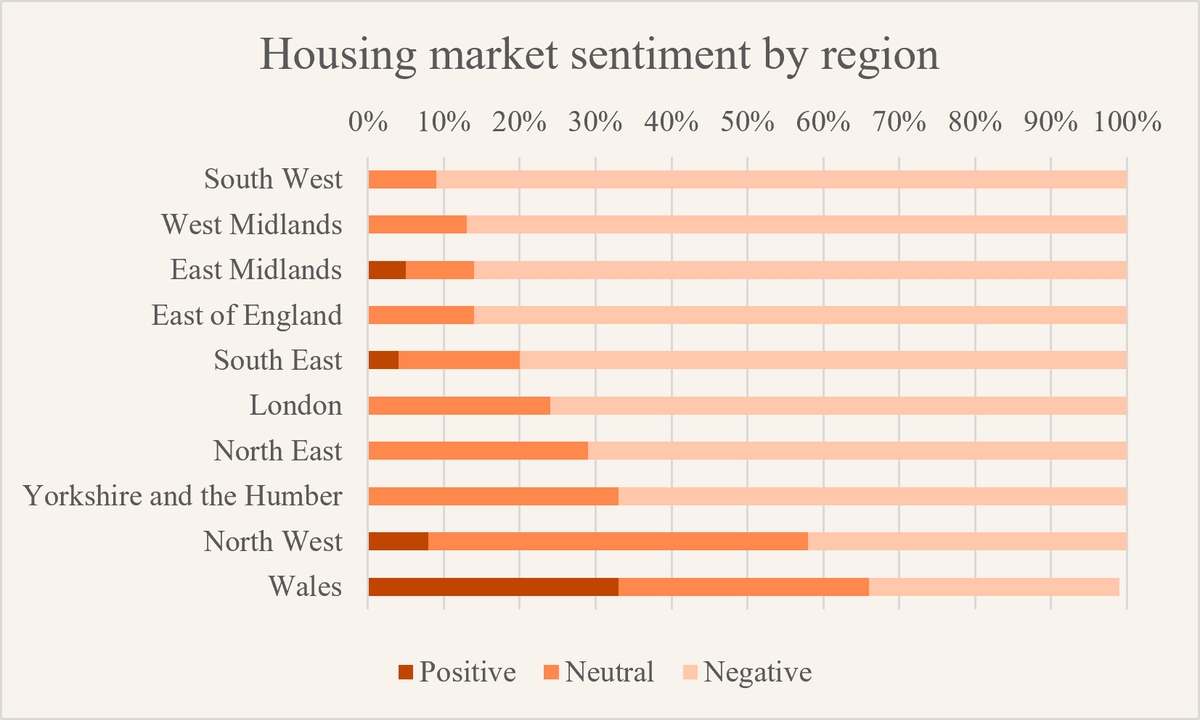
The regional variation highlights the importance of local market conditions to SME developers, with sales demand, affordability, and viability economics varying significantly between different parts of the country.
Nevertheless, the overall picture remains one of caution, with relatively few respondents reporting a very positive outlook in any region.
Appetite to start new sites
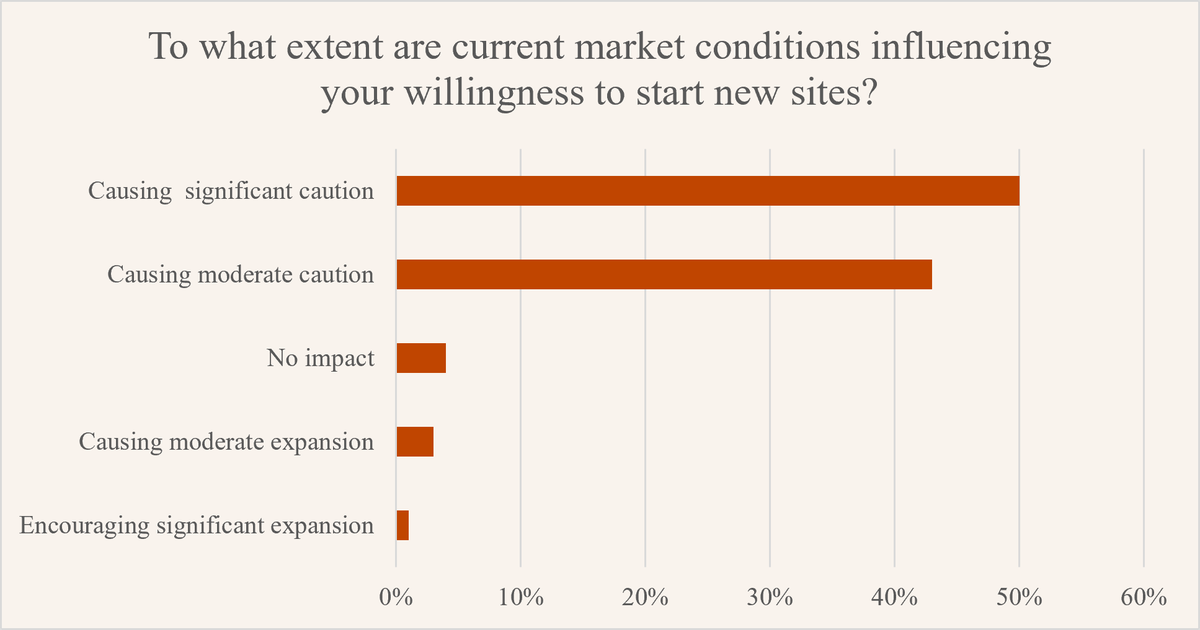
Current market conditions continue to have a significant influence on SME developers’ willingness to start new sites.
Half of respondents said current conditions are causing significant caution around starting new sites, while a further 43% said they are causing some caution. Only 4% reported that current conditions have no impact on their willingness to start new sites. Just 4% of respondents said market conditions were encouraging them to start new sites, including only 1% who said they were encouraging significant expansion.
Demand side constraints
To provide further context to the findings on market sentiment, respondents were asked to identify the three most significant demand-side and supply-side constraints affecting their ability to deliver new homes.
Low buyer confidence was identified as the most significant demand-side constraint facing SME developers, with 74% of respondents citing this, up from 73% last quarter.
Wider housing market conditions are the second most frequently cited factor, identified by 70% of respondents.
Other significant constraints include Stamp Duty Land Tax (31%), mortgage interest rates (26%) and affordability (25%).
Together, these findings demonstrate that the challenge for SME developers is not simply the availability of sites or the ability to secure planning permission. The ability to sell completed homes at a price purchasers can afford, while still achieving an acceptable development margin, remains a fundamental constraint.
Weak buyer confidence can also create a wider knock-on effect for development decisions. Where developers are uncertain about sales rates or achievable values, the risk associated with committing capital to land and construction increases.
Supply side constraints
Development viability is the most frequently cited supply-side constraint, cited by 75% of respondents.
Planning process delays follow closely at 68%, while regulatory and taxation burdens account for 51%. The cost and availability of land were also cited by 30% of respondents.
HBF's SME Home Builder Sentiment Survey is issued every quarter. Learn more about the survey and how to get involved.